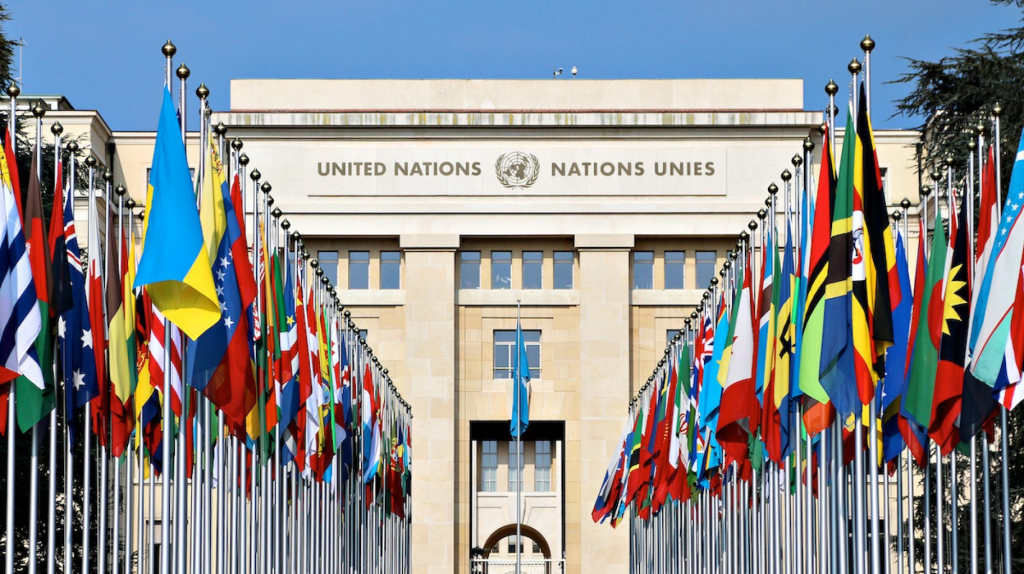
The United Nations has been the most active international institution in the realm of climate policy. For this reason, I will first illustrate why climate change is such a complex problem to solve, then examine three of the UN’s major protocols in an attempt to explain the extent and conditions it has prevented environmental degradation. I claim that although the extent of success varies with each protocol, the conditions for interstate cooperation is ultimately dependent on a detailed and quantitative plan of action as well as the degree of immediate threat felt by the states’ population.
Climate change, at its core, is an extremely layered problem because the environment is a public good, meaning that it is indivisible, nonexclusive and subject to the tragedy of the commons. This tempts states to be free-riders, as they can benefit from reduced emissions without taking any action themselves. While coercion can eliminate free-riders, these measures not only invite retaliation but are also expensive for the UN. Thus, the effectiveness of international institutions has been fiercely debated between realists and liberalists, with the former arguing institutions are anarchical with cooperation being short-lived, while the latter believing states can collaborate to maximize prosperity and mitigate the pernicious effects of hegemonies.
The historical Montreal Protocol, driven by the principles of liberalism, succeeded because of two key conditions: the narrow focus of the agreement and the public fear that sparked the issue. In 1987, 197 states signed a binding agreement to phase out CFC (chlorofluorocarbon) production to restore the hole in the ozone layer. Thirty years later, the ozone layer is projected to completely heal by 2050 with Ronald Reagan calling it a “monumental achievement” (Department of State). Firstly, the treaty was successful because it only targeted variations of CFC’s, which made it drastically easier for states to draft a concrete plan of action. Australia, for example, “implemented a 35% reduction of polluting AC units and a 10% halt on its manufacturing” (Australian Government). However, realists argue that states leveraged these definitive numbers to boost its reputation with no sincere intention of pollution reduction, but it’s a win-win situation where self-interested actions inadvertently lead to a socially optimal outcome. Secondly, another compelling factor for the protocol’s success was the imminent and tangible threat of a damaged ozone layer to the world population. Propelled by media circulation of the worrisome statistic that “skin cancer incidence would increase by 2% for each percent ozone reduction”, fears for one’s physical health incentivized an expedited implementation process (NCBI). Yet, some are still convinced that technological advancements of appliances are the major driver for CFC eradication, to which I argue it is fear that propelled these advancements in the first place.
Stemming from the apparent success from the Montreal Protocol, world leaders attempted to emulate and apply its framework to the Kyoto Protocol but yielded underwhelming results due to an insufficiently narrow framework and a lack of urgency felt by the populace. The Kyoto Protocol aimed to “stabilize greenhouse gas concentrations in the atmosphere” (EEA). Yet after two decades, the protocol resulted in a 40% increase of global emissions (Investopedia). Firstly, clauses in the protocol are overtly vague and are not broken down into manageable steps states can act upon. Drawing from excerpts such as “enhancement of energy efficiency” and “encouragement of appropriate reforms”, these amendments are expansive and don’t include any numerical targets evident even with Japan’s inability to cut GHG emissions by 6 percent (UNFCCC, FT). While some contend that broader clauses are necessary to ensure the applicability of the contract to all states, detailed agreements will always fare better due to their specific and measurable characteristics. Secondly, the notion of climate change was a relatively novel concept in 1997 and people were yet to be familiarized with its devastating effects. The Kyoto Protocol was drafted before desperate pleas from climatologists citing the alarming rise of CO2 at the Mauna Loa Observatory and turbulent patterns in Greenlandic Ice Cores. Alternatively, others argue people were already aware of climate change through personal experiences with natural disasters; however, these encounters were more likely to have been independent weather events unrelated to climate change until 2001, when China increased its coal production by 3.65 billion tons (CSIS).
Harnessing the lessons learned from the Kyoto Protocol, the world then scrambled towards the Paris Agreement, a contract that was not only a “tailored cooperation” that provided a specific 2°C limit for global warming, but also implemented during an era when climate advocacy was at its zenith with tailwinds from Greta Thunberg and global climate protests (UNFCCC). With the agreement meeting both conditions to prevent environmental degradation, policymakers are optimistic about its success. Although some states are already on track to meet its goals, pessimists are already arguing the 15-year timeframe is impractical to achieve such ambitious targets. However, people underestimate human ingenuity’s ability to prolong earth’s carrying capacity with emerging technologies including stratospheric sulfate injection and geoengineering (Hardin, Lomborg). For example, Morocco is introducing “3,900 MW of combined-cycle technology on natural gas” and is well within range to exceed its target GHG reduction of 32% by 2030 alongside India, the Philippines and many more (INDC). Moreover, with the United States’ reentry into the Agreement, the executive branch promised to spend $2 trillion on green infrastructure, influencing countless states to invest in renewables and to eliminate fossil fuel subsidies themselves (Rosane). For the time being, the Paris Agreement is en route to success, and with it being the model for how we structure our future, it is imperative for states to prioritize their climate agendas.
As shown with the failure of the Kyoto Protocol, the track record of the UN is mixed at best. However, under the conditions of a specific plan of action and proactive, educated citizens, multilateral agreements addressing climate change have a greater chance of succeeding. With the world at the cusp of suffering from potentially irreversible consequences of climate change, it is vital, now more than ever, for us to act.
Below is my final paper submission for my class on Intro to International Relations during the Fall 2020 school year.
Works Cited
“Articles of the Paris Agreement.” UNFCCC: Paris Agreement, Nov. 2015, unfccc.int/files/meetings/paris_nov_2015/application/pdf/paris_agreement_english_.pdf.
“Atmospheric Greenhouse Gas Concentrations.” European Environment Agency, 25 Feb. 2020, http://www.eea.europa.eu/data-and-maps/indicators/atmospheric-greenhouse-gas-concentrations-6/assessment-1.
Australian Government. “Australia’s Imports and Exports of Ozone Depleting Chemicals (2019 Report).” Department of Agriculture, Water, and the Environment, 2019.
Henriksen, T., et al. “Ultraviolet-Radiation and Skin Cancer. Effect of an Ozone Layer Depletion.” Photochemistry and Photobiology, U.S. National Library of Medicine, 1990, pubmed.ncbi.nlm.nih.gov/2367555/.
“How Is China’s Energy Footprint Changing?” ChinaPower Project, 26 Aug. 2020, chinapower.csis.org/energy-footprint/.
“The Montreal Protocol on Substances That Deplete the Ozone Layer – United States Department of State.” U.S. Department of State, U.S. Department of State, 25 Sept. 2020, http://www.state.gov/key-topics-office-of-environmental-quality-and-transboundary-issues/the-montreal-protocol-on-substances-that-deplete-the-ozone-layer/.
“Morocco INDC.” UNFCCC, 2 June 2015, www4.unfccc.int/sites/submissions/INDC/Published%20Documents/Morocco/1/Morocco%20INDC%20submitted%20to%20UNFCCC%20-%205%20june%202015.pdf.
Pilling, David. “Subscribe to the FT to Read: Financial Times Japan Struggles to Meet Kyoto Protocol Targets.” Subscribe to Read | Financial Times, Financial Times, 15 Sept. 2004, http://www.ft.com/content/31ca2bb2-070d-11d9-9672-00000e2511c8.
Rosane, Olivia. “Biden Reaffirms Commitment to Rejoining Paris Agreement.” EcoWatch, EcoWatch, 6 Nov. 2020, http://www.ecowatch.com/paris-climate-agreement-biden-2648649350.html?rebelltitem=4.
Tardi, Carla. “The Kyoto Protocol.” Investopedia, Investopedia, 6 Nov. 2020, http://www.investopedia.com/terms/k/kyoto.asp.
United Nations. “KYOTO PROTOCOL: FRAMEWORK CONVENTION ON CLIMATE CHANGE.” UNFCCC, 1998, unfccc.int/resource/docs/convkp/kpeng.pdf.
 Bookmarks and Bullshit
Leave a comment