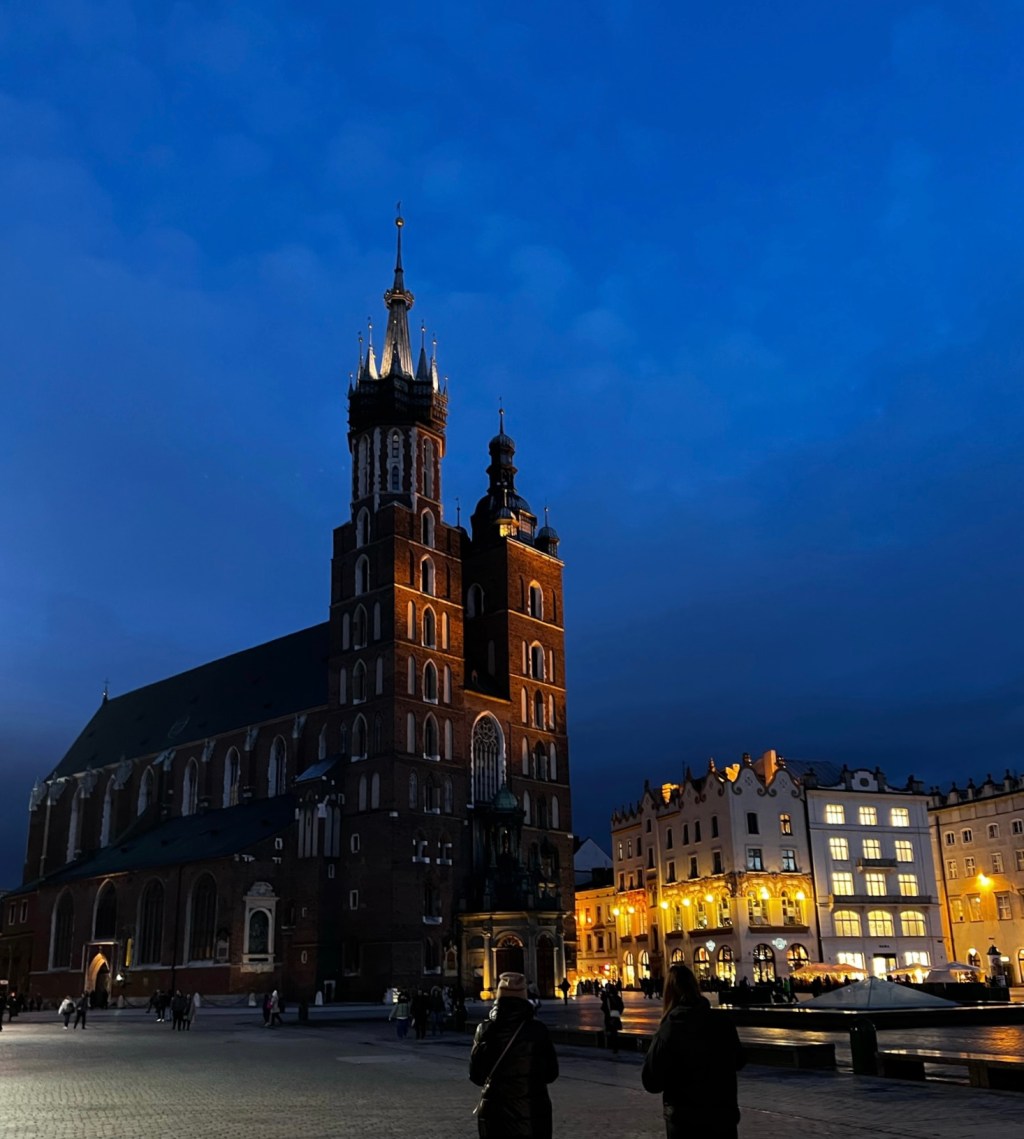
Poland sounds like a deviation from reality for most – a faraway film location at best. Before going, we had little to no reference point to help guide us and shape our expectations for this new country, its history, and its current thriving culture. By the time we boarded the plane back home, we were forever impacted by the heart-wrenching history, incredible cuisine, and beautiful city.
I landed in Krakow on the snowy night of February 1st. Having packed my backpack to the brim, we excitedly went through security and into the main street of Krakow. Being the second biggest city in Poland, it has a long and rich history dating back to the 7th century, when a small settlement was founded on the banks of the Vistula River. In the late 18th century, Krakow came under Austrian rule and became part of the Austro-Hungarian Empire. Most infamously, it also played a significant role in World War II, serving as the capital of the General Government under Nazi occupation.
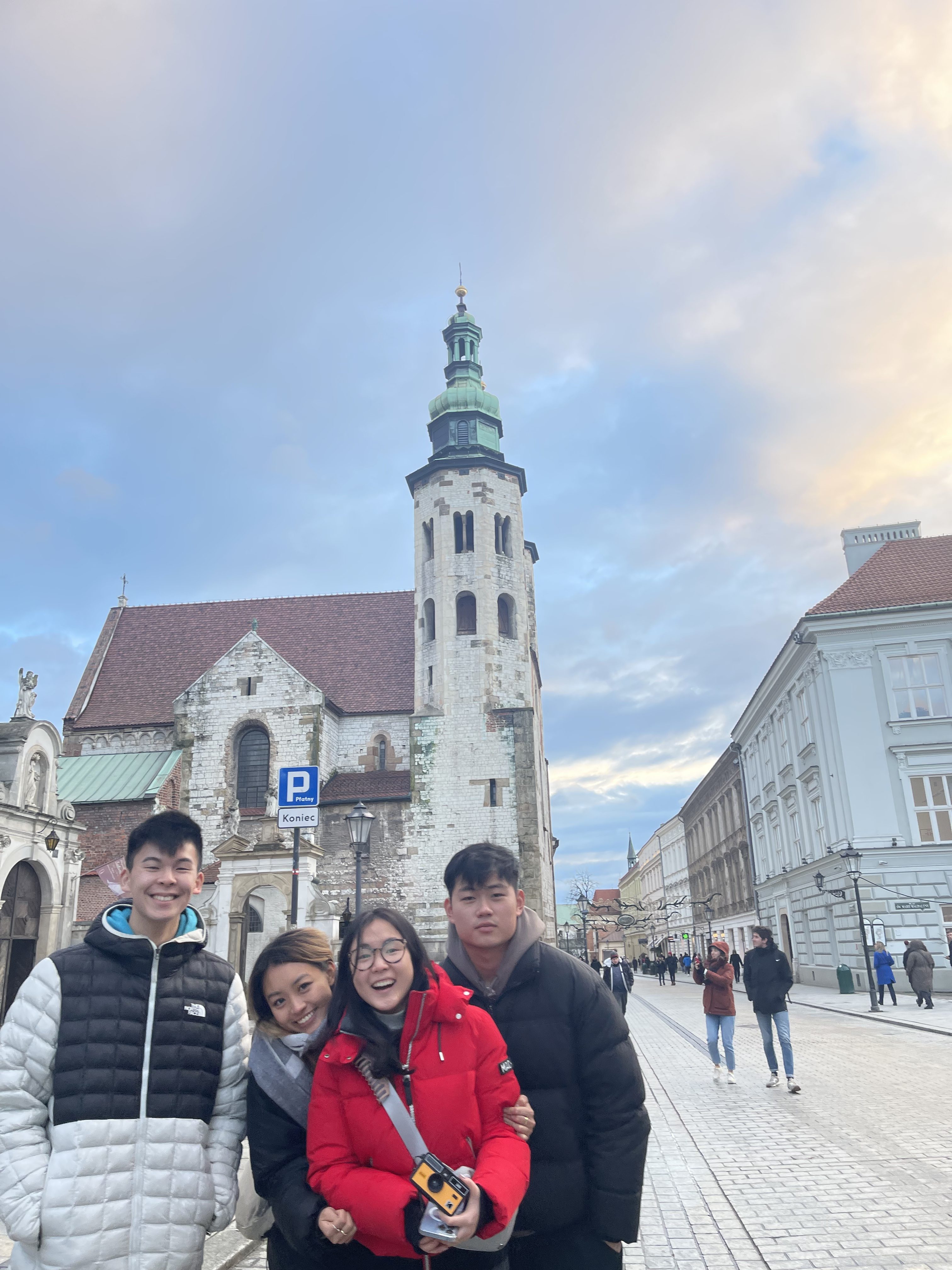
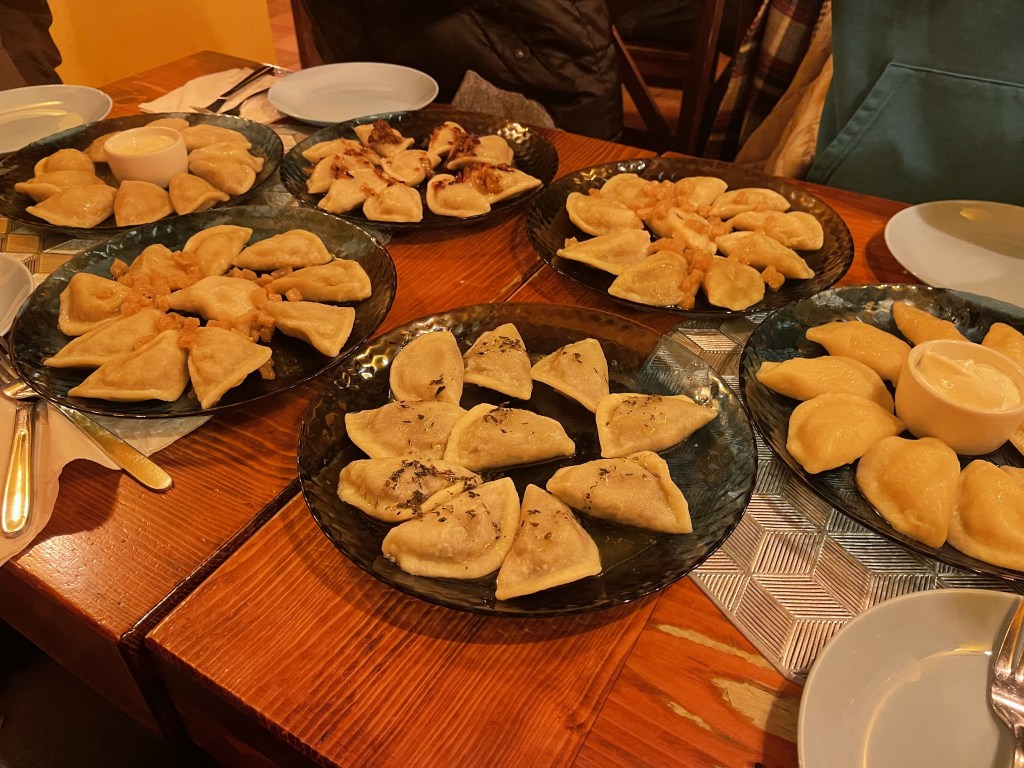
We were staying in an Airbnb in the Jewish quarter, a short walk away from the famous Wawel Castle, Old Town, and St Mary’s Basilica. Once we landed, we had a quick bite at St. Vincent’s Pierogi’s before heading straight to bed after a long day of travel. To those who don’t know, pierogis are polish dumplings filled with sweet and savory ingredients, and they are delicious!
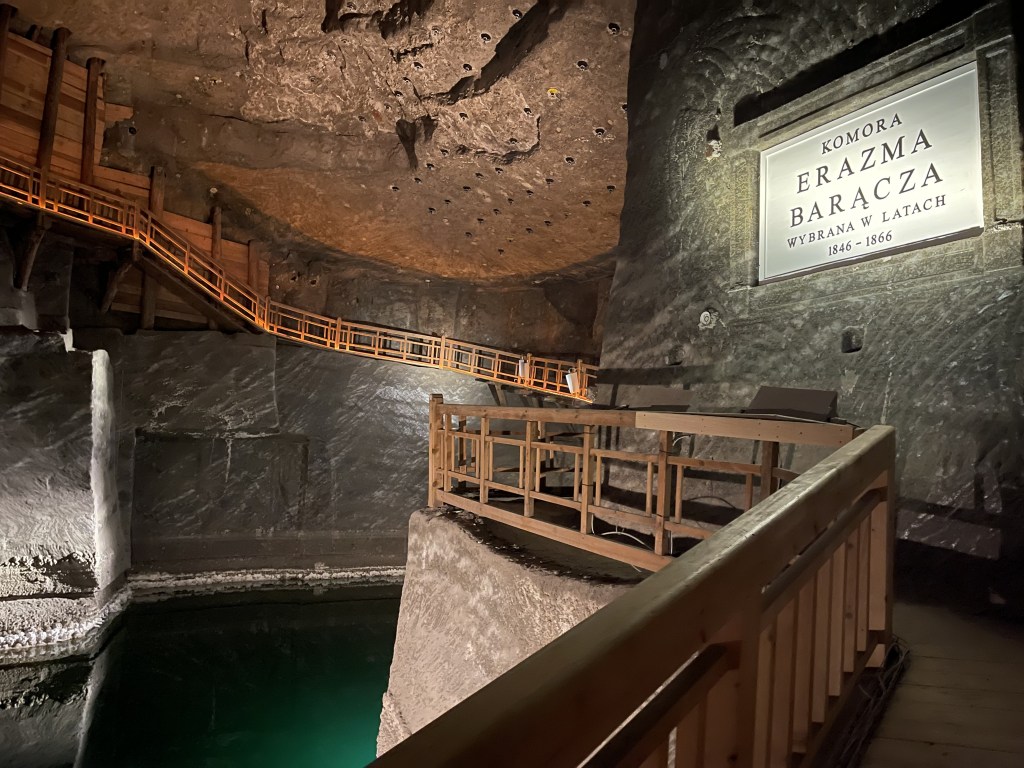
The next morning, we woke up bright and early to make it to our time slot for the Wieliczcka Salt Mines. A designated UNESCO World heritage site, it is one of the oldest salt mines in the world and has been in operation since the 13th century. After descending down a never-ending wooden spiral staircase, we reached the entrance to the mine at 150 meters below ground. I immediately noticed the gushes of wind which blew across the mine, which I later learned was for ventilation to ensure fresh air reached us. Although the salt mine felt more like a commercial operation for tourists, we were still mesmerized by the stunning underground chambers and sculptures made entirely out of salt. Specifically, there was a grand ballroom which contained glass chandeliers and carvings of famous paintings such as Da Vinci’s The Last Supper. We later learned that this ballroom was frequently used for local weddings and even company banquets.
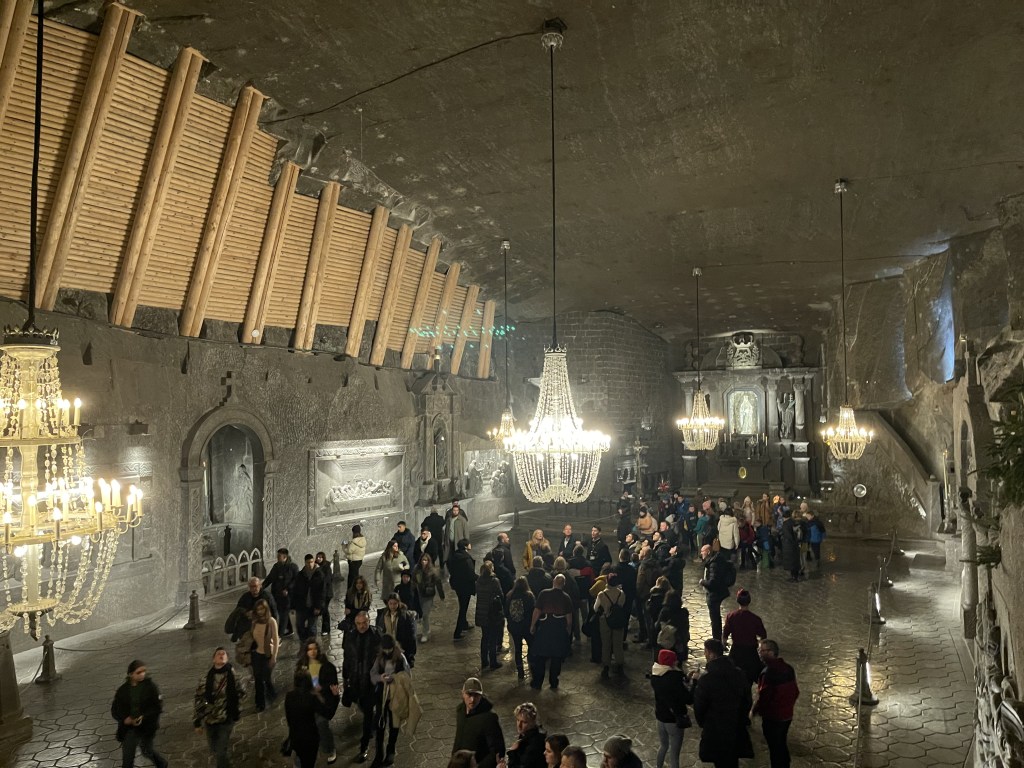
It was breathtaking to see the intricate details craved into the walls. Being Poland’s largest mineral export, salt has always been the backbone of Poland’s economy throughout its history. However, I can only imagine the treacherous working conditions centuries ago – as workers had to burn highly combustable oil to ensure they didn’t mine into gas deposits.
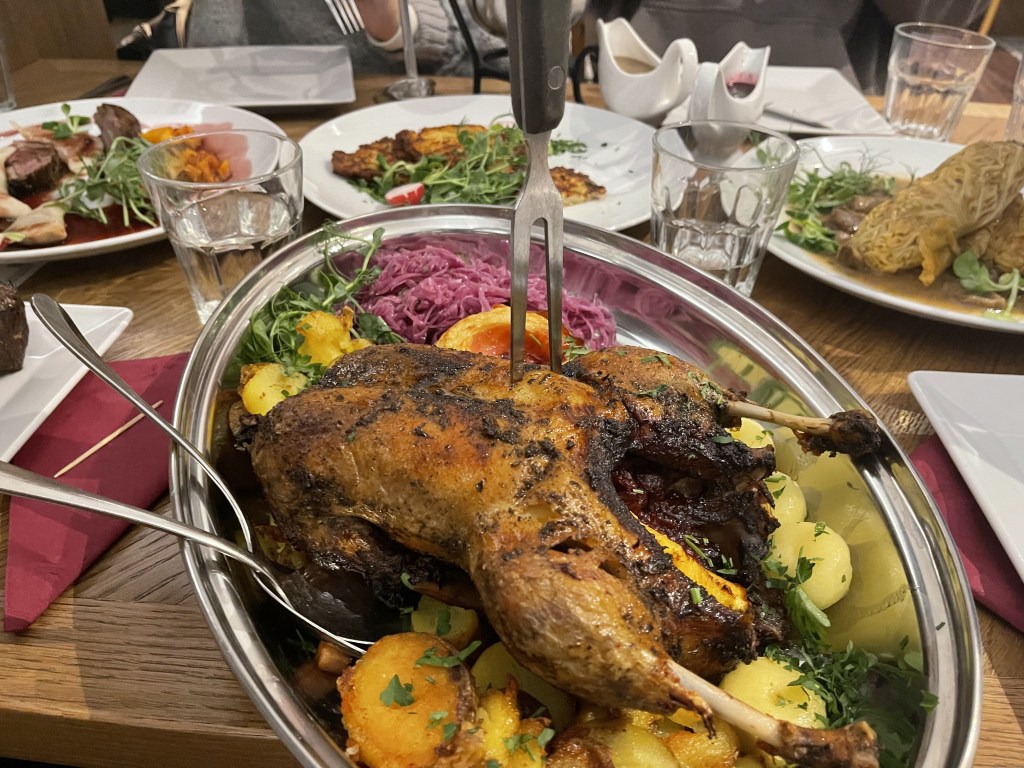
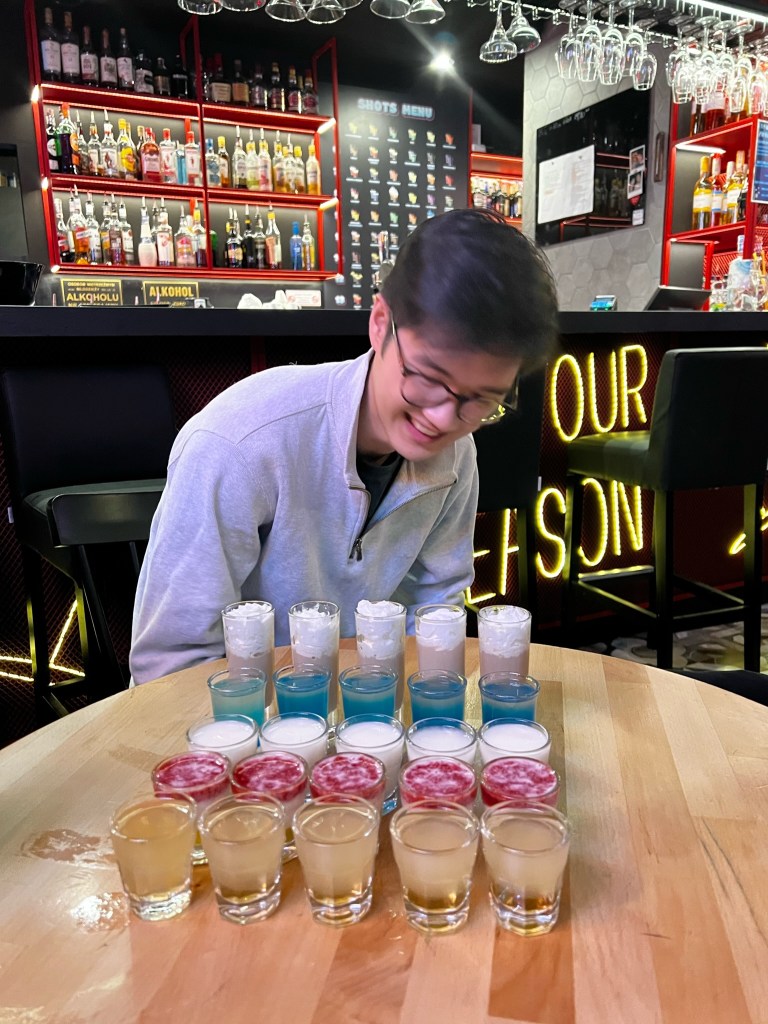
After the salt mines, we took a cab back to the old town and wandered around the old square. For dinner, we decided on a restaurant called the “Black Duck”, serving Easter European dishes such as cabbage rolls, potato pancakes, and a thanksgiving style duck platter. It was one of the most tender meats I’ve ever tried, and it paired extremely well with their homemade cranberry sauce. We washed down the meal with some drinks at a shot bar nearby. With each shot costing around $1, we ordered almost everything on the menu and tried concoctions we never knew existed.
The morning after, we took a group bus to Auschwitz, located an hour west of Krakow. On the car ride, the driver played an emotional documentary of the final liberation movement in 1945, which set the tone for the gravitas of the situation. As soon as we entered the camp, we were greeted by a gated fence with the German words “Arbeit macht frei”, or “work sets you free”. It was a chilling moment as I imagined thousands of Jewish prisoners marching through this gate as seen in pictures.
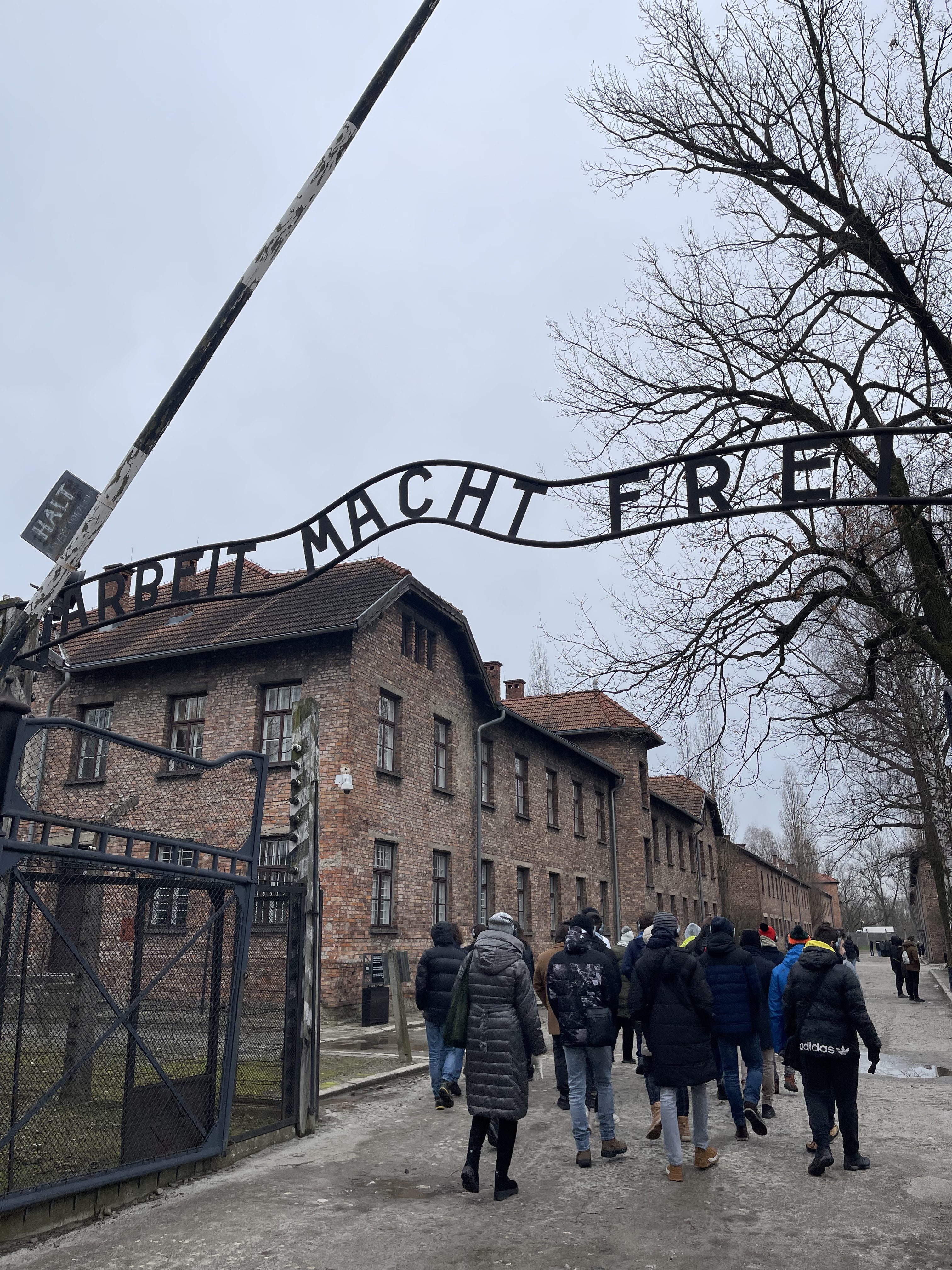
The cloudy sky emanated an ominous tone onto the camp. As we entered the eerily silent place, broken gravel crunched below us. The main path was lined with rows and rows of brick settlements with tall, bare trees lining its walkways and electric fences on its periphery. Our guide directed us to the camp museum (housed in an ex-Nazi barrack). In here, showed the remnants of the war – piles of used Zyklon B gas canisters, shoes, luggage, kitchen appliances, and photos lined the walls.
The most horrifying part exhibit on the top floor of the museum. Before we entered, our guide specifically instructed us not to take any photos. In the room, we saw mounds upon mounds of human hair. The hair was braided together and cut from the stem of the skull. Laying there in that room were the dignity of hundreds of thousands of people. In essence, the Nazi’s stripped the sense of identity from its victims, the most basic concept of what made a human human.
What followed was even more appalling. After exiting the museum, we were guided into the only remaining gas chamber in the camp. A sense of emotion flooded within me as I stepped over the door. The chamber was made of stone and had an eerily pungent sense of smell. Within, one lone light lit the room. I squinted closely at the desolate walls, making out the green and black mold beginning to form on them. Occasionally, my eyes would catch glimpses of fingernail markings, sending chills down my spine. The guide gave us a few minutes to mourn and reflect, ensuring us that it was okay to cry.
Still uneasy about the chambers, we walked towards the larger Birkenau concentration camp. Within this camp, there were hundreds of torn-down buildings which used to be barracks where victims slept. Often, they housed six hundred people per building, and it was frightening to witness the living conditions, much less imagine how cold it must have been to live there.
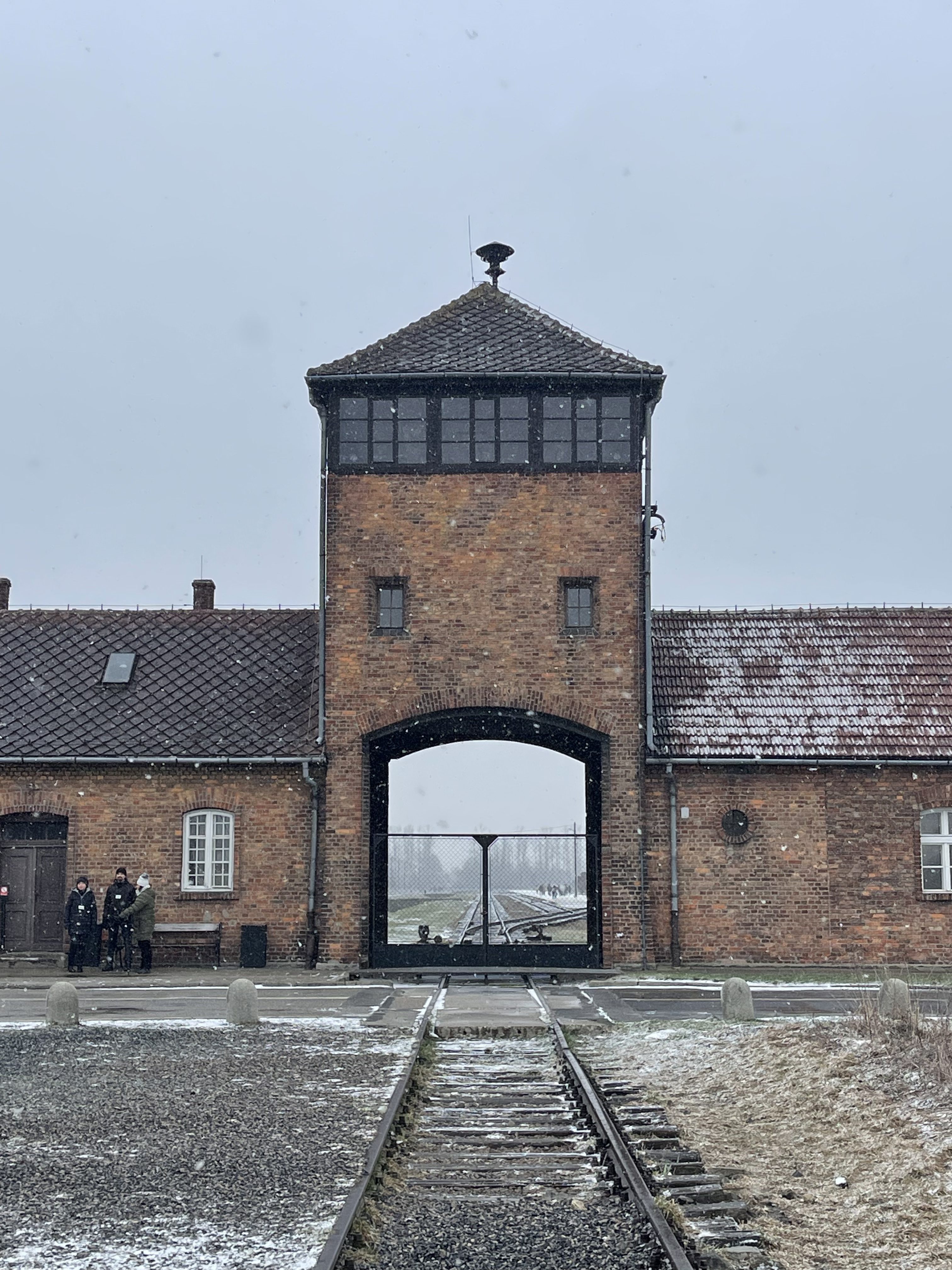
It is hard to fathom such fatal atrocities were committed on the grounds we stood on that day – the epitome human suffering all boiled down to a five-by-five-acre field in the polish countryside. History teaches us how to safeguard the future, but it also reminds us of human nature at its worse. Let us never forget…
The last day called for a more cheerful activity. My friends and I had found a shooting range near our hotel, and we decided that it would be a once in a lifetime experience to handle a firearm. As we arrived at the Krakow Shooting Academy, we were handed a brochure which listed different gun packages. Naturally, I chose the package titled ‘Like A King’.
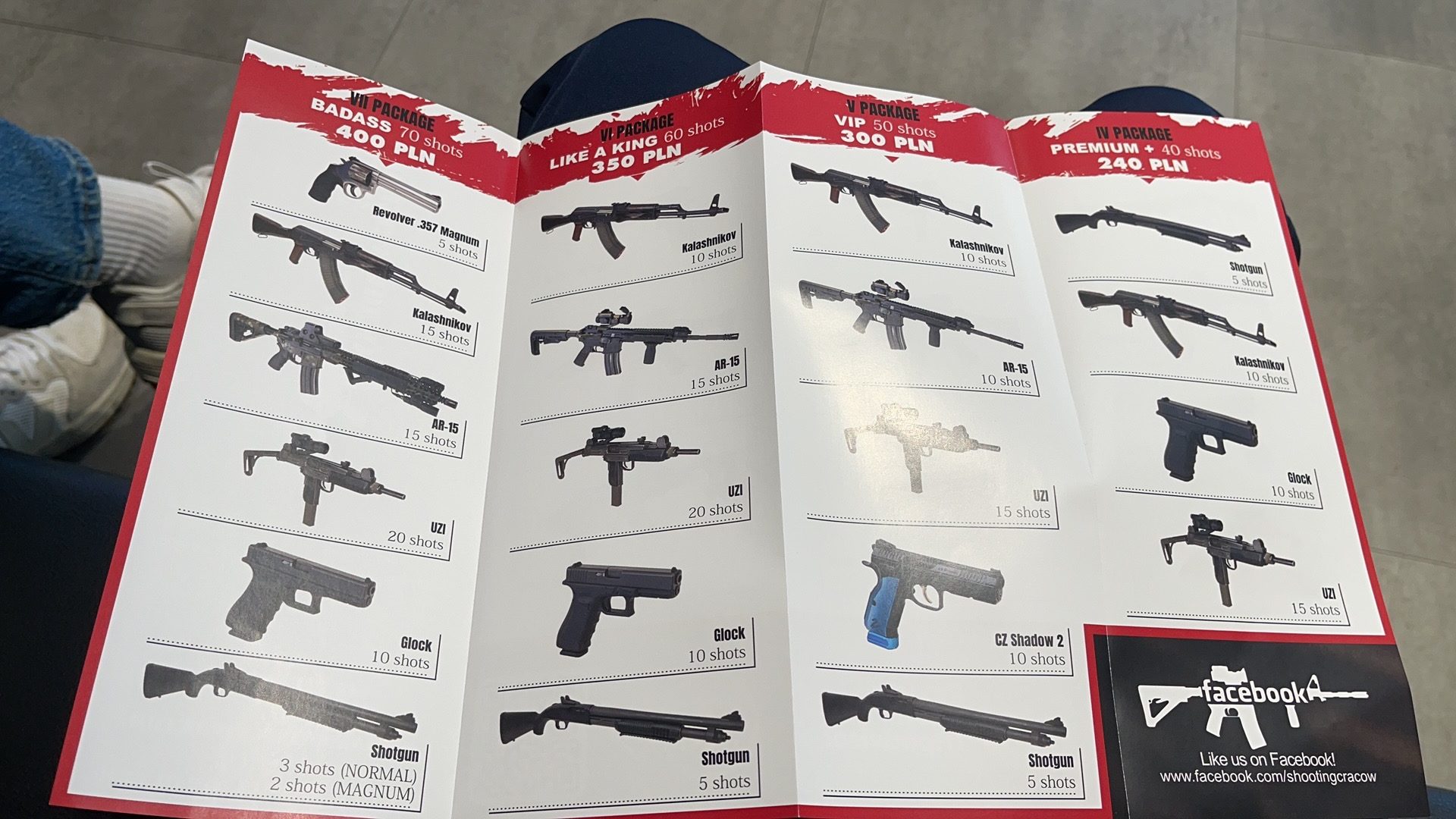
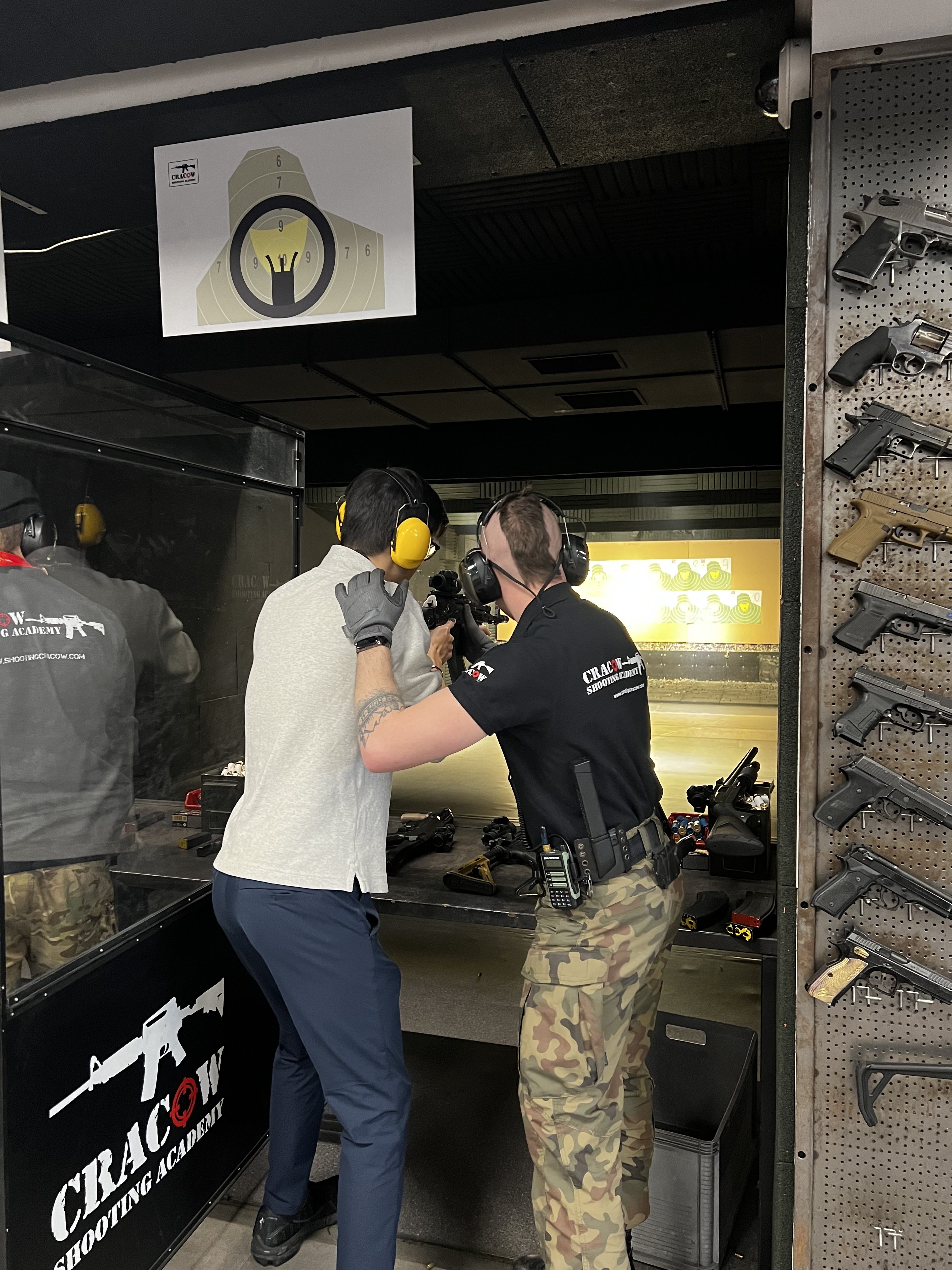
With no background checks and merely two minutes of safety instructions, I was holding an AK-47 in my hands, shooting away at an imaginary manikin.
Krakow, Poland: February 1st to February 4th, 2023
With Anna Fu, Brendan Li, Joy Cao, and Jason Zhang
 Bookmarks and Bullshit
Leave a comment