I’m going to let you all in on a secret. I had always viewed reading books as gaining knowledge, and the more you read the more knowledge you accumulated. For this reason, most of the books I have bought have been because of their ability to provide facts, update me on current events, or teach me relevant concepts in a business context. What this also meant was that I had always been hesitant of the value fiction could bring to my life. I figured the reluctance to read fiction stemmed from my high school English teachers making me read them and write lengthy essays after the fact. However, I recently became enamored with books considering the ease of buying them in London with bookstores at almost every corner. And slowly, as I read more and more, I noticed my collection lacked any trace of fiction books. Soon, I knew that had to change.
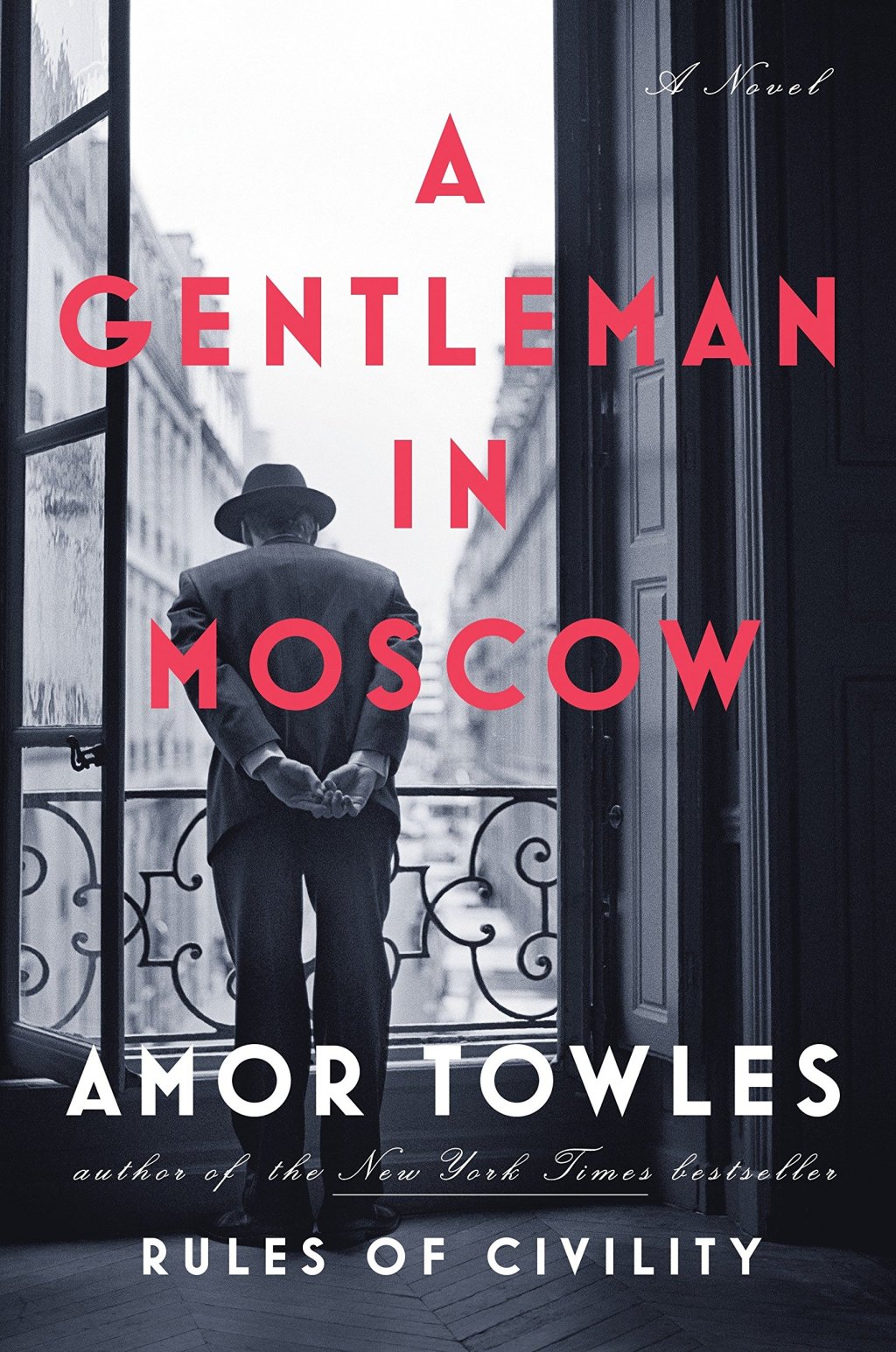
I picked A Gentleman in Moscow because it was the perfect in between. It wasn’t one of those soapy teenager murder mystery novels, nor was it one of those hard-core classic books like Pride and Prejudice. Thus, when I saw it was referencing a time period not too far in distant memory and set in a country I had been wanting to learn more about, I immediately picked it up.
Amor Towles writes A Gentleman in Moscow as his first passion project having just left his secure, corporate job in Manhattan. In retrospect, his decision to pursue full-time writing has gifted millions of readers a glimpse into his expertise of creating captivating storylines and his craftsmanship of building characters that seem ethereal.
The book, set between 1920 and 1960 Soviet Union, details Count Alexander Rostov sentenced to indefinite house arrest in the well-regarded Metropol Hotel in downtown Moscow. It is within this ever-changing political climate that Towles writes in third person detailing the life of the Count. From the people the Count meets, Towles uses the novel’s characters as a canvas for depicting the broader changes happening in society.
He portrays the innocent Nina, who once dreamed of becoming a princess, eventually defecting to the Bolsheviks and aiding their mission to centrally-plan agricultural production. Or even the acclaimed film star Anna Urbanova who was once beloved by the nation and fell out of favor due to her films celebrating individualism. Moreover, there is the Count’s best friend and poet Mikhail Mindich, who had once championed the arrival of the revolution but later sentenced to a Siberian labor camp due to his reluctance to censor poetry.
The profiles of these characters reflect a tumultuous period of Russian history. The epitome of such was when the restaurant in the Metropol hotel removed all the labels on their wine bottles so there would be no hierarchy within offered wines. From this anecdote, one can deduce Towles’ ingenuity to blur the lines between reality and fantasy to highlight the themes worth uncovering in this novel, including change, freedom, fate, and love.
Additionally, I was equally impressed with the Count’s mannerism of a true gentlemen. From his understanding of sophisticated sprits to his nuanced demeanor, I have gained an appreciation of what it means to be a gentleman and seek to emulate parts into my own life.
All in all, I think A Gentleman in Moscow is a wonderfully written novel. In almost 500 pages of writing, Towles seems to keep his reader engaged throughout and never misses a chance to drop a subtle metaphor. As this is the first fiction book I have willingly read, I learned of the beauty of writing, the deeply embedded character development that makes it hard for readers to bid farewell, and the pertinent themes that permeate into our own lives. Not to mention the bittersweet ending has left me yearning for more. This is a book for anyone who appreciates refined writing, a fascinating storyline and just something different.

 Bookmarks and Bullshit
Leave a reply to Fabio Xie Cancel reply